
Some people favor Hetian jade, while others prefer jadeite. Many know that Hetian jade is soft jade and jadeite is hard jade, but this is only one aspect. There are many other differences between the two. So which of these jades appeals to you more? Below, we’ll discuss the distinctions between Hetian jade and jadeite. Let’s explore them together!
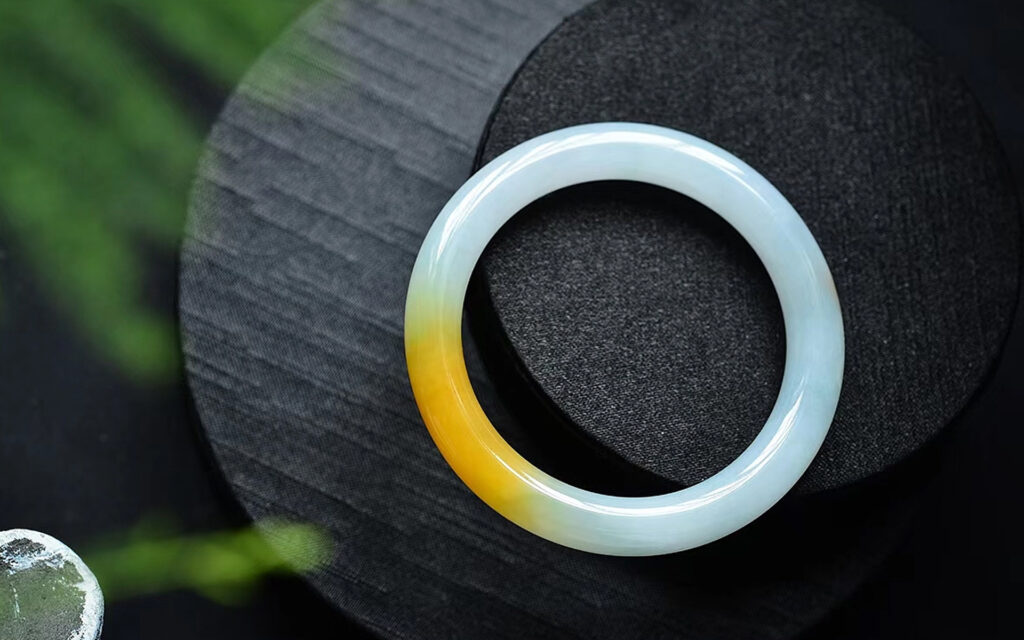
1. Origin
Those familiar with Hetian jade know that the finest comes from Xinjiang. Broadly speaking, Hetian jade encompasses not only Xinjiang’s variety but also stones from Russia, Qinghai, and other regions, characterized by over 95% tremolite content.
The primary sources of Xinjiang Hetian jade are southern Xinjiang, Hetian, Yutian, Ruoqiang, Qiemo, and Kashgar. Hetian jade is considered the finest among jades and is deeply cherished.
Jadeite is primarily sourced from Myanmar, with most of China’s jadeite originating there. Myanmar-sourced jadeite generally boasts superior quality and appreciation potential compared to other regions.
2. Chemical Composition
Hetian jade is named for its nephrite content exceeding 95%. White jade contains 99% nephrite, bluish-white jade 98%, and green jade 97%.
Hetian jade consists of hydrated calcium magnesium silicate, composed of minerals like nephrite and amphibole. Its colors include white, green, bluish-white, turquoise, black, and yellow.
Hetian white jade derives its color from the highest concentration of white tremolite. Hetian green jade owes its hue to elevated iron content, while Hetian black jade contains trace amounts of graphite. The proportions of these chemical constituents significantly influence the jade’s coloration.
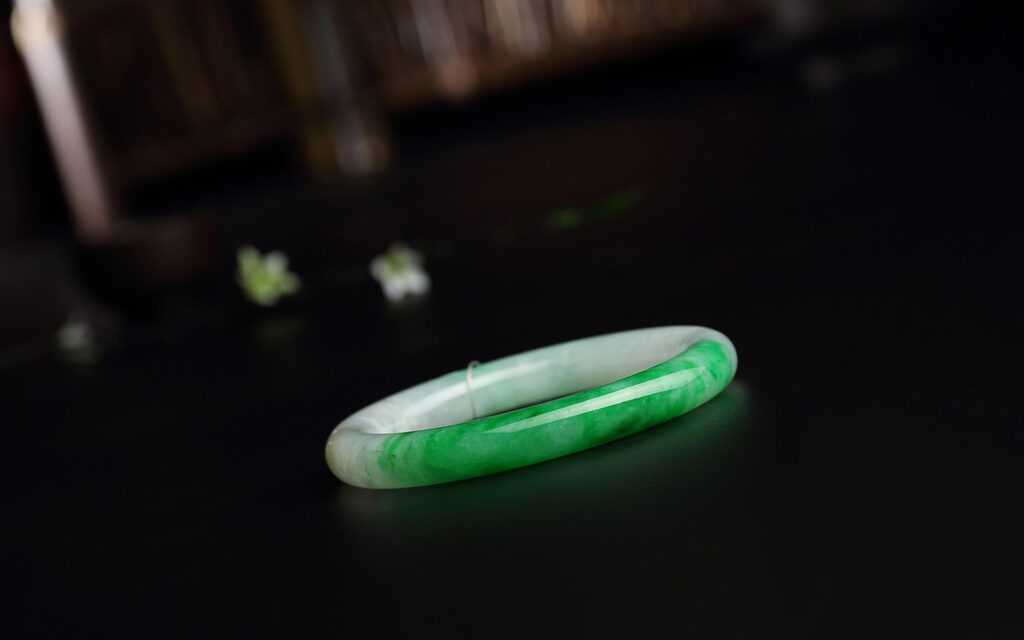
Jadeite’s chemical composition includes sodium aluminum silicate along with trace elements like calcium, chromium, nickel, manganese, and iron. Jadeite colors include green, red, yellow, purple, blue, and white. Different hues result from specific chemical elements—red indicates iron content, while green signifies over 2% chromium.
3. Hardness
A simple distinction between Hetian jade and jadeite lies in their hardness. However, beginners may wonder: If Hetian jade formed through millions of years of transportation and erosion, why is it still classified as “soft jade”? This classification of soft and hard jade is based on their relative hardness.
Following the Second Opium War, vast quantities of Chinese jade were plundered and transported to Europe. French mineralogists conducted systematic studies on Hetian jade and jadeite, discovering they consist of two distinct mineral compositions.
Later, Japanese scholars referenced these findings, translating the terms into Japanese as “soft jade” (软玉) and “hard jade” (硬玉). Subsequently, Chinese geologist Li Hongzhang provided Chinese interpretations for these terms, leading to the widespread adoption of the “soft jade/hard jade” classification.
Hetian jade is a soft jade with a hardness between 6 and 6.5, possessing good toughness and resistance to breakage. Jadeite is a hard jade with a hardness between 6.5 and 7, but its high brittleness makes it prone to cracking.
Although Hetian jade is called soft jade, it is not soft; on the contrary, it has excellent toughness.
4. Preferred by Different Groups
Much Hetian jade is crafted into pendants, bracelets, and plaques. Its colors generally fall into four categories: white, green, black, and yellow. The most prized is the warm, pure white mutton-fat jade, valued for its even, luminous color and pleasing appearance.
Jadeite is typically carved with figures, landscapes, or floral motifs. Its colors are rich and varied, characterized by intensity, vibrancy, and brilliance. Green hues are most prized, with ice-like and glass-like translucency commanding the highest value.
The distinction between Hetian jade and jadeite lies in their symbolic interpretations: Hetian jade embodies nobility, spiritual essence, and purity, while jadeite represents wealth and elegance. Consequently, their appeal resonates with different audiences.
Hetian jade boasts a resilient yet delicate texture, embodying a gentle and reserved beauty that resonates more deeply with traditional Chinese aesthetic sensibilities. What are your thoughts? Feel free to share your insights below!